How to Wash T-Shirts Without Fading, Shrinking or Losing Their Shape
Your favourite T-shirt deserves better than being thrown into the washing machine without a second thought. A few sensible laundry habits can help keep everyday clothes looking and feeling good for longer.
There's a particular disappointment that comes with pulling your favourite black T-shirt out of the wash and noticing it doesn't look quite the same.
Perhaps the colour seems duller. The neckline sits differently, or the sleeves feel a little tighter than before.
You bought it because you liked the fit and fabric. Naturally, you'd prefer to keep it that way.
The good news is that taking care of everyday T-shirts doesn't require expensive products or complicated laundry routines.
It starts with knowing what you're washing, choosing the right settings and treating the fabric according to its care instructions.
Here's how to make that part of your routine.
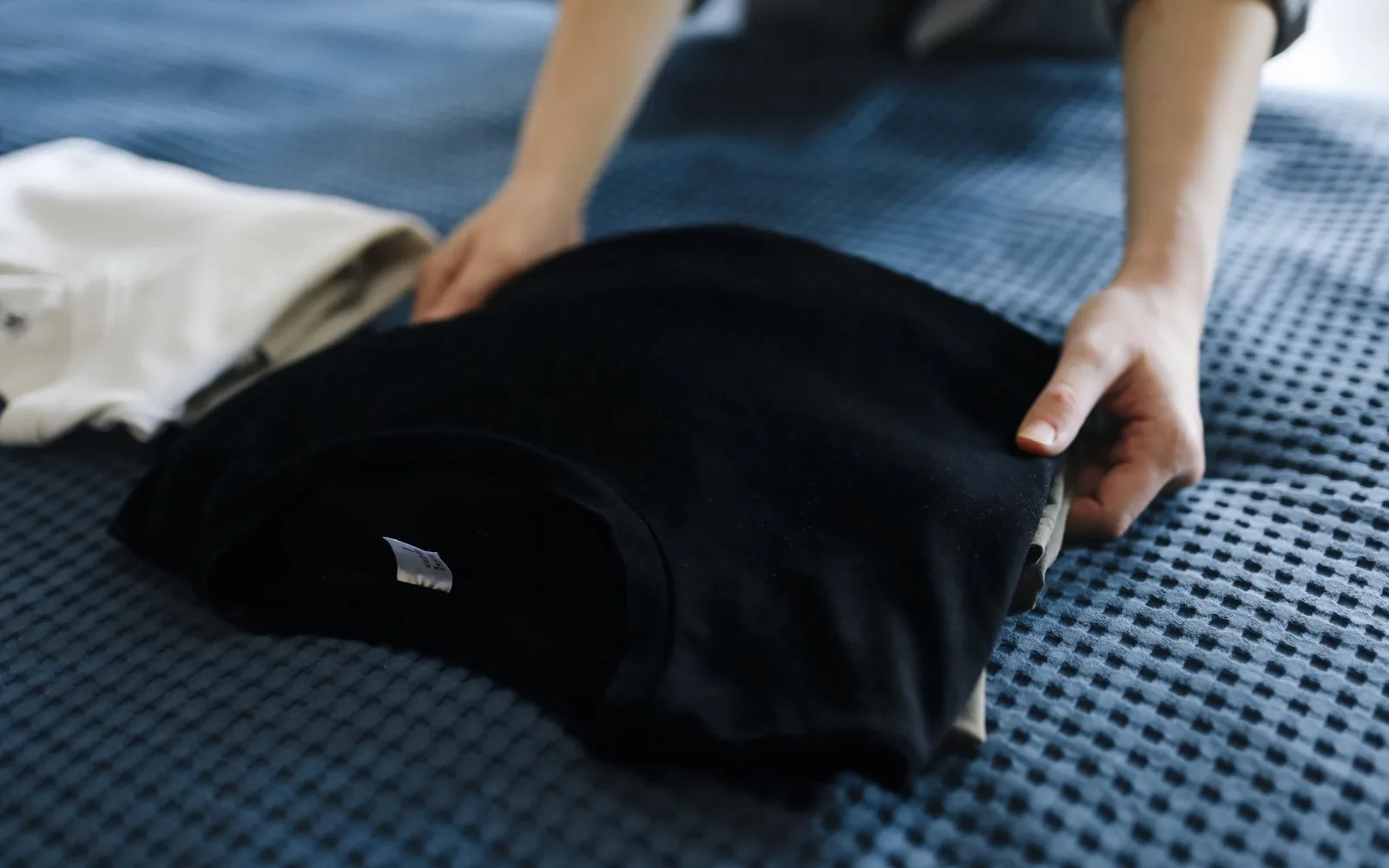
Before anything goes into the machine
Picture your usual laundry basket.
There are a few dark T-shirts, some lighter clothes, perhaps jeans, towels and a couple of pieces you wore during a particularly hot Karachi afternoon.
It's tempting to wash everything together, especially when you're in a hurry.
But separating clothes thoughtfully can make a difference.
Start by checking the care labels. Then sort garments by colour, fabric requirements and how heavily soiled they are.
Dark or strongly coloured clothes may release dye, particularly during early washes. Washing them separately from lighter garments helps reduce the risk of colour transfer.
Rougher items can also create unnecessary friction against softer fabrics.
That doesn't mean every T-shirt needs its own wash.
It simply means avoiding combinations that could cause problems.
If you're washing something new with a strong colour, be particularly cautious until you know how it behaves.
The small label you usually ignore
Most T-shirts have a care label tucked into a side seam or neckline.
It's easy to overlook, but it can save you from making avoidable mistakes.
The label tells you which washing and drying processes are suitable for that particular garment.
A number inside a washtub symbol indicates the maximum permitted washing temperature. Lines beneath the symbol indicate a gentler washing process.
Drying and ironing symbols provide further instructions.
For example, a T-shirt labelled for washing at 30°C shouldn't automatically be washed at 40°C simply because it's made from cotton.
Similarly, some garments can be tumble dried while others require gentler drying arrangements.
The important thing is to follow the instructions for the actual garment rather than assuming every T-shirt behaves the same way.
When in doubt, choose a suitable gentle process within the care-label limits.
How to wash black T-shirts without unnecessary fading
Dark T-shirts are wardrobe favourites for a reason.
They work with jeans, trousers and almost anything else you already own.
Unfortunately, changes in colour can be particularly noticeable on black and other dark fabrics.
Before washing, turn the T-shirt inside out. This can help reduce rubbing against the visible outer surface.
Use the washing temperature permitted by the label, and avoid unnecessarily harsh washing conditions.
Choose detergent appropriate for the garment and follow the recommended amount. Using more detergent than necessary doesn't automatically produce cleaner clothes.
It's also sensible to separate dark clothing from lighter items, particularly if the dye's colourfastness is uncertain.
After washing, dry the garment according to its care instructions. Where suitable, drying away from strong direct sunlight may help limit avoidable colour changes.
None of these steps can guarantee that a black T-shirt will never fade.
Fabric quality, dyes, finishing, wear and laundering all affect how colour changes over time.
But careful washing can help avoid adding unnecessary stress.
Why a T-shirt sometimes shrinks
You've probably experienced it at least once.
A top that fitted comfortably before washing suddenly seems shorter or tighter.
Shrinking isn't always caused by one mistake.
Some fabrics change dimensions as their fibres and structure respond to water, heat and mechanical movement.
The extent of that change depends on the material, how it was manufactured and the washing and drying conditions.
Hot washing or high-temperature tumble drying can contribute to unwanted changes in susceptible garments.
That's why the care label matters.
If the garment permits it, a cooler, gentler wash may be a sensible choice. Avoid exposing the T-shirt to excessive heat during drying.
And don't assume that a garment described as pre-shrunk will remain completely unchanged.
Pre-treatment can reduce dimensional changes, but it doesn't necessarily eliminate them.
There's also a manufacturing side to this. MP Apparels & Garments explains how shrinkage, fading and pilling can be assessed before clothing enters bulk production.
As a shopper, you can't control those production decisions. You can, however, follow appropriate care instructions to avoid making potential problems worse.
What about printed T-shirts?
A printed T-shirt needs a little extra consideration.
Whether it's a graphic design, lettering or another decorative finish, the printed area may respond differently to washing and heat than the surrounding fabric.
Check the garment's care instructions, especially if the decoration has its own requirements.
Turning the T-shirt inside out before washing may help reduce surface abrasion.
Avoid scrubbing directly over the print unless the care instructions permit that treatment.
If ironing is allowed, follow any instructions concerning the decoration. Don't place a hot iron directly over a print that may be damaged by heat.
Small precautions are easier than trying to rescue a cracked or distorted design afterwards.
The drying stage deserves just as much attention
Washing is only half the process.
You can select an appropriate wash cycle and still expose a T-shirt to unsuitable heat or handling afterwards.
If the care label permits tumble drying, use the stated conditions.
Where natural drying is suitable, gently reshape the garment and dry it as instructed.
Some T-shirts can be hung without difficulty. Others may benefit from different support to avoid stretching while wet.
Avoid pulling aggressively at the neckline or sleeves.
In Pakistan, many households rely on outdoor drying. That's practical, but strong sunlight and prolonged exposure can contribute to colour changes in some fabrics.
For dark or colour-sensitive clothing, a shaded, well-ventilated location may be preferable when consistent with the care instructions.
Make sure garments dry adequately before storing them, particularly during humid weather.
Why your T-shirt loses its shape
Sometimes the problem isn't obvious shrinking.
The body still fits, but the neckline seems loose. The shoulders hang differently, or the hem no longer sits evenly.
Several factors can contribute.
Fabric structure, garment construction, laundering conditions and the way wet clothing is handled all influence shape retention.
Avoid twisting or aggressively wringing garments that require gentle treatment.
When removing a T-shirt from the wash, handle it according to the fabric's needs. If permitted, gently smoothing it back towards its intended shape before drying may help.
Storage matters as well.
Fold tops that are prone to stretching, and avoid forcing delicate necklines over unsuitable hangers.
If a garment repeatedly loses its shape despite appropriate care, the issue may involve its original material or construction rather than your laundry routine alone.
Those little fabric balls: what can you do?
Small fuzzy balls sometimes appear around the underarms, sides or other areas where fabric experiences repeated rubbing.
They're called pills.
Pilling happens when loose fibres become entangled on the fabric surface. Its severity depends on fibre characteristics, yarn and fabric construction, finishing and wear.
You may reduce unnecessary friction by washing susceptible clothes with suitable items and following the recommended cycle.
Turning them inside out can also help limit abrasion of the visible surface.
If pills have already formed, use a fabric-care tool suitable for the material and follow its instructions. Work gently so you don't damage the fabric underneath.
Don't assume that every soft T-shirt will remain completely free of pilling.
It's one of several characteristics influenced by both manufacturing and use.
Does workout clothing need different treatment?
Not every T-shirt belongs in the same laundry category.
A casual cotton top worn for a few hours may have different care requirements from clothing used during a demanding workout.
Activewear often uses synthetic or blended fabrics, sometimes with stretch fibres or specialised finishes.
These materials may require particular washing temperatures, detergents or drying methods to protect their intended characteristics.
If you regularly wear workout clothing, Performance Heritage's guide to choosing women's workout tops explains how fabric, movement, moisture handling and fit affect activewear choices.
We'll explore workout-clothing care separately because a solution suitable for an ordinary casual T-shirt isn't necessarily appropriate for every technical garment.
The safest starting point remains the garment's own instructions.
When the problem begins before you buy
Even careful washing can't correct every underlying quality issue.
A poorly constructed neckline may still lose its shape. A fabric with inadequate colourfastness can change colour despite sensible care.
This is one reason it's worth paying attention to fabric feel, stitching and finishing when shopping.
Our guide to recognising a good-quality T-shirt before buying offers practical advice about the details worth checking.
A thoughtful purchase and an appropriate care routine work together.
Neither guarantees that clothing will last forever, but both can help you avoid preventable disappointment.
Your next laundry day, made simpler
Before washing your next load of T-shirts, take a moment to check a few things.
| What to check | Why it matters |
|---|---|
| Care label | Establishes permitted washing, drying and ironing methods |
| Colour sorting | Helps reduce unwanted dye transfer |
| Fabric type | Different materials may need different treatment |
| Washing temperature | Excessive heat can affect susceptible garments |
| Wash intensity | Unnecessary friction can contribute to surface wear |
| Detergent | Choose a suitable product and appropriate quantity |
| Drying method | Heat, sunlight and handling can affect appearance |
| Storage | Suitable folding or hanging helps avoid unnecessary distortion |
You don't need a complicated routine.
The useful habits are usually simple enough to repeat every week.
Frequently asked questions
How should I wash cotton T-shirts?
Follow the garment's care label. Where permitted, a gentle wash at a suitable temperature, sensible colour sorting and appropriate drying can help reduce unnecessary wear.
Should I wash T-shirts inside out?
Turning T-shirts inside out can help reduce abrasion against the visible outer surface, particularly for dark or printed garments. It doesn't guarantee protection against fading or damage.
Does cold water stop clothes from shrinking?
Not completely. Cooler washing conditions may reduce some risks for susceptible garments, but dimensional changes also depend on fabric construction, finishing and drying.
Can I dry black T-shirts in sunlight?
Follow the care label. Where suitable, drying in the shade may help limit unnecessary colour changes in susceptible fabrics.
Can a shrunken T-shirt return to its original size?
Sometimes gentle reshaping may improve the fit of certain fabrics, but shrinkage may be permanent. There is no reliable method that restores every garment to its original dimensions.
Why does my T-shirt pill after washing?
Pilling can result from loose fibres becoming entangled through friction during wear or laundering. Fabric construction and fibre characteristics also influence the outcome.
A little care goes a long way
Most of us don't want to spend much time thinking about laundry.
We simply want our favourite clothes to feel comfortable, fit properly and remain presentable.
Reading the care label, sorting clothes sensibly and avoiding unsuitable heat or unnecessary friction are habits that can help.
At MPGEAR, we believe everyday clothing should be easy to wear and practical to care for.
Good laundry habits won't make a T-shirt last forever, but they can help you enjoy the clothes you already own for longer.