How to Choose the Right T-Shirt Fit
A good T-shirt fit should feel comfortable, move naturally and suit how you plan to wear it. These simple checks make comparing fits easier.
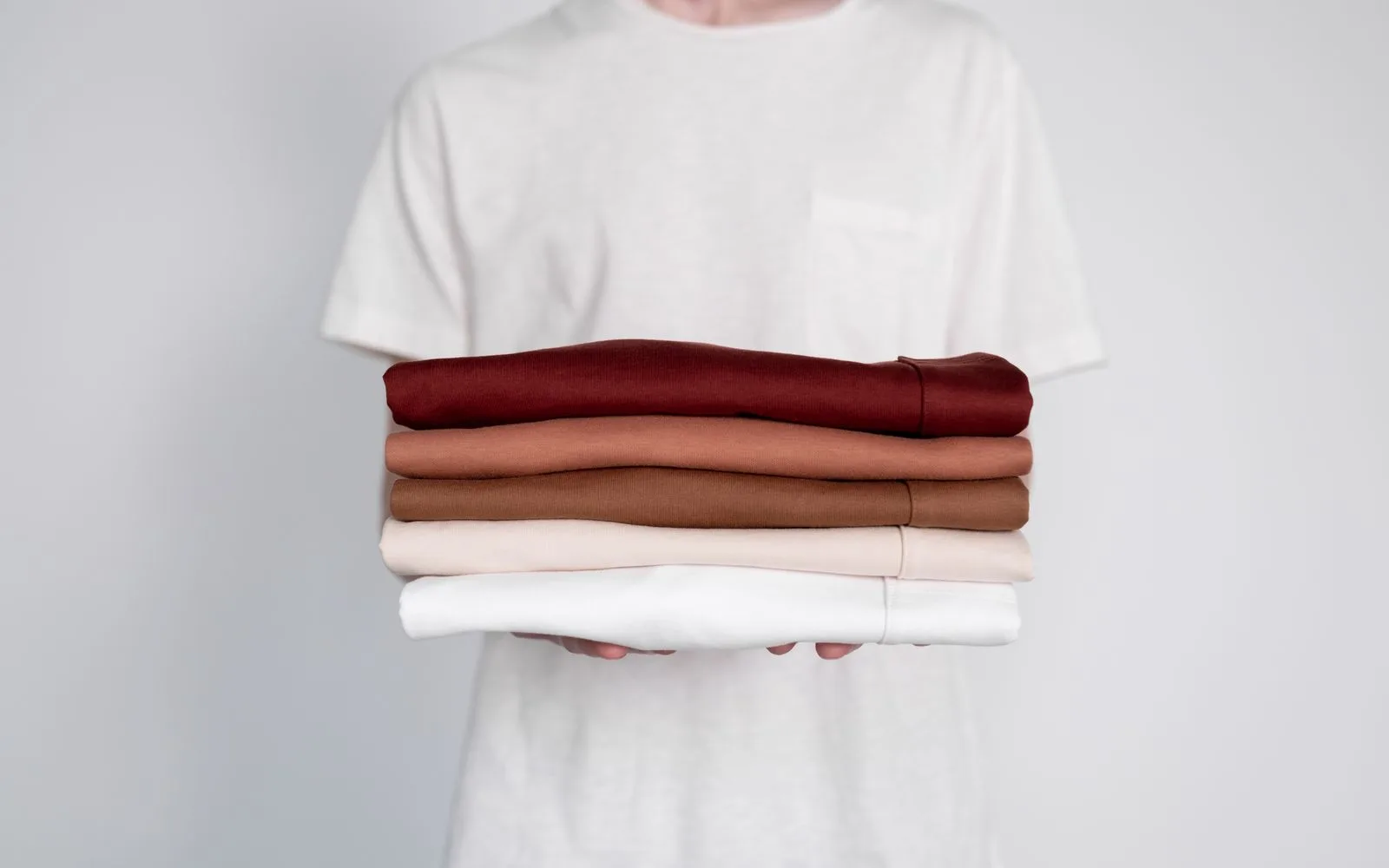
Start with the shoulder seam
The shoulder seam is a useful first reference point. A regular fit usually places it near the edge of your shoulder, while a deliberately relaxed or oversized cut may place it lower.
The intended silhouette matters more than following one universal rule. Check the product description and size guide before deciding that a dropped shoulder means the size is wrong.
Check the chest without pulling the fabric
The fabric should sit comfortably across the chest without strong horizontal pulling. You should also be able to move your arms without the body of the shirt lifting excessively.
For a cleaner silhouette, choose controlled room through the chest. For relaxed styling or layering, allow more space while keeping the neckline and shoulders intentional.
Consider sleeves and overall length
Sleeve length changes the visual balance of a T-shirt. Shorter, closer sleeves often look sharper, while wider or longer sleeves create a more relaxed shape.
The hem should work with how you wear your trousers and whether you prefer the shirt tucked or untucked. Compare the garment measurements with a T-shirt you already like.
Use measurements, not only the size label
Size labels can vary between cuts and brands. Measure a well-fitting T-shirt flat, then compare its chest width and length with the published garment measurements.
If you fall between sizes, decide whether comfort, a closer outline or extra layering room is the priority.